
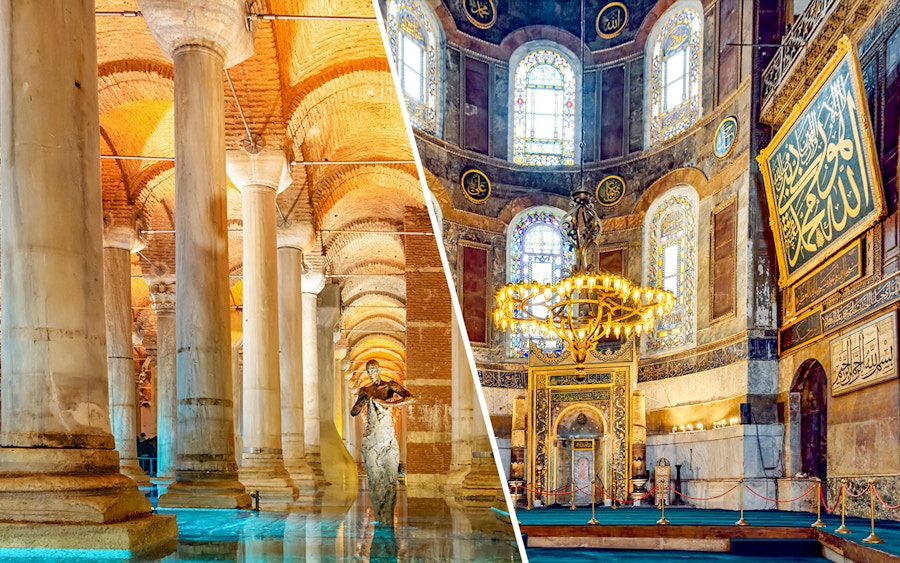
If you’ve traveled to Istanbul or have it on your travel list, visiting the Basilica Cistern is one of the most fascinating and mysterious experiences you shouldn’t miss and you need ticket entrance to visit this historical place. This ancient structure is a gateway to an underground world that has captivated tourists and history and architecture enthusiasts for years.
History and Historical Significance
The Basilica Cistern was constructed during the Byzantine Empire under Emperor Justinian I around 530 AD. The main purpose of this vast underground reservoir was to supply fresh water to the palaces, government buildings, and important structures of Constantinople (the old name of Istanbul), especially during sieges when access to water sources was limited.
This underground structure was built on the remains of an old basilica (a large public building with tall columns), hence the name “Basilica Cistern.” Water was sourced from distant forests and reservoirs and transported into the city through a complex network of channels.
Architecture and Structure
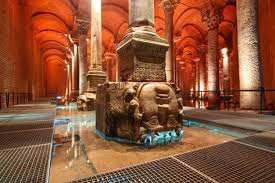
The cistern is approximately 90 meters long and 70 meters wide and can hold about 80,000 cubic meters of water. Its ceiling is supported by 336 marble columns standing 9 meters tall, arranged in 12 rows of 28 columns each. Each column features different styles, including Corinthian, Greek, and Roman designs, some adorned with carvings and artistic motifs.
One of the cistern’s most intriguing features is the presence of two columns with Medusa heads placed sideways and upside down. These marble heads are believed to be repurposed from earlier structures to strengthen the columns. Many mysteries surround the reason for their unique placement, always drawing visitors’ attention.
Visiting Experience
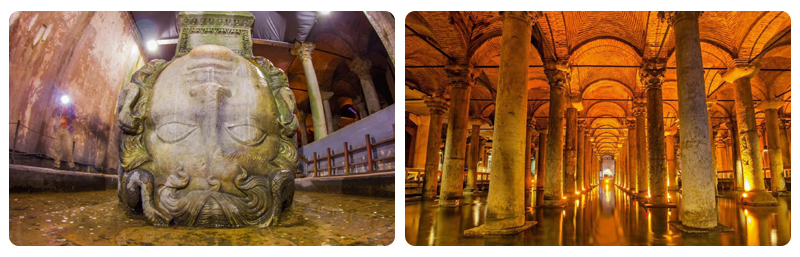
Stepping inside the Basilica Cistern is like entering a different world; soft lighting reflects off the water and columns, creating a mysterious and tranquil atmosphere. The gentle sound of dripping water adds to the magical blend of history and architecture.
Visitors walk on wooden platforms that allow them to get close to the columns and the Medusa heads. Touring this underground marvel offers a glimpse into the sophisticated engineering and architecture of over 1,500 years ago.
During some times of the year, the cistern hosts music and cultural performances, making the visit even more memorable.
Important Tips for Visitors
• Opening Hours: Usually open daily from 9 AM to 5 PM, but times may vary during holidays or seasons, so check the official website before visiting.
• Tickets: It’s recommended to buy tickets online to avoid long queues.
• Location: Near major attractions like Hagia Sophia, Topkapi Palace, and the Blue Mosque, making it easy to visit several key sites in one day.
• Environment: The cistern is humid, and the floor can be slippery, so wear suitable shoes and walk carefully.
• Guides: Audio guides or tour guides are available to enrich your visit with detailed information.
Why Visit the Basilica Cistern?
The Basilica Cistern is more than just an ancient water reservoir; it’s a living testament to Byzantine art, engineering, and history that has endured for thousands of years. It offers a unique opportunity to dive deep into the history and architecture of one of the world’s oldest cities, where culture and mystery intertwine to tell a fascinating story.
Summary
• The Basilica Cistern is an ancient underground water reservoir built in the 6th century in Istanbul.
• It features 336 marble columns supporting a massive ceiling.
• Two columns with Medusa heads are among its most famous features.
• Visitors can explore the mysterious, beautifully lit interior and experience Byzantine history firsthand.
• It’s conveniently located near Istanbul’s top historical attractions, making it a must-visit for history and architecture lovers.
Frequently Asked Questions (FAQ) about Basilica Cistern
1. Where is the Basilica Cistern located, and how can I get there?
The Basilica Cistern is located in Istanbul’s Sultanahmet district, close to Hagia Sophia and Topkapi Palace. It’s easily accessible by walking from these sites or by public transport like the tram.
2. What are the opening hours of the Basilica Cistern?
Generally, it is open daily from 9 AM to 5 PM, but hours may vary on holidays or in different seasons. Check the official website before your visit.
3. Do I need to buy a ticket to enter?
Yes, tickets are required for entry. It’s recommended to buy tickets online to avoid long queues.
4. Is the Basilica Cistern suitable for children?
Yes, children can visit, but due to the dark and humid environment, it’s best to supervise them closely and ensure they walk carefully.
5. Are audio guides available at the Basilica Cistern?
Yes, audio guides in multiple languages are usually offered to enhance your visit.
6. Is the Basilica Cistern accessible for people with mobility issues?
The cistern has wooden walkways and some stairs, which might make access difficult for people with mobility challenges. It’s advisable to check conditions beforehand.
7. Can I take photos inside the Basilica Cistern?
Yes, photography for personal use is allowed, but flash photography may be prohibited to protect the artifacts.
8. How long does a typical visit last?
A full visit usually takes between 30 to 60 minutes, depending on your interest in exploring and learning about the site




Leave a Reply