
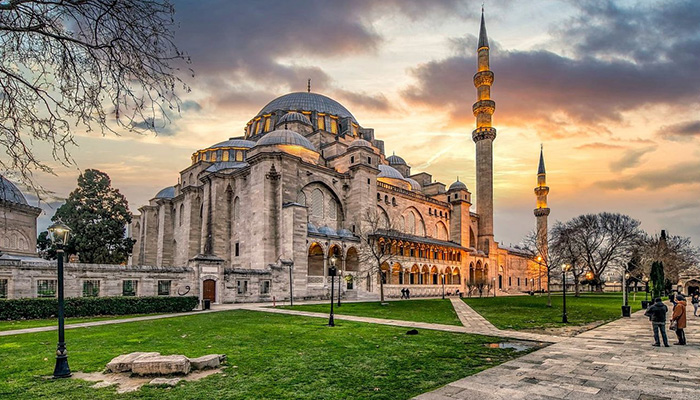
1.Hagia Sophia Mosque
Hagia Sophia, located in Istanbul, is one of the world’s most important and historic monuments, with a histor
y spanning over 1,500 years. It was originally built between 532 and 537 AD by the Byzantine Emperor Justinian I as a Christian cathedral and served as the spiritual center of the Byzantine Empire.
Its architecture is highly advanced and iconic, especially its massive dome which is over 31 meters in diameter and appears to float above the main hall. This dome influenced the design of many future religious buildings, including the nearby Blue Mosque.
Hagia Sophia is more than just a religious site; it symbolizes the cultural, political, and artistic transformations of the region. In 1453, after the Ottoman conquest of Istanbul led by Sultan Mehmed II, the building was converted from a cathedral into a mosque. Islamic features such as minarets, a mihrab (prayer niche), and a minbar (pulpit) were added, while many of the original Christian mosaics were preserved.
In 1935, under the leadership of Mustafa Kemal Atatürk, the Republic of Turkey secularized Hagia Sophia and turned it into a museum, allowing people of all backgrounds to appreciate its historical and artistic value. It was also designated a UNESCO World Heritage Site in 1985.
In 2020, Hagia Sophia was reconverted into a mosque, but it remains open to visitors outside of prayer times. It continues to stand as a living symbol of coexistence between different cultures, religions, and histories.
Inside, Hagia Sophia is adorned with intricate mosaics depicting religious scenes, emperors, and saints. Some mosaics were covered or removed after its conversion to a mosque, but many have been restored and are still visible today.
2.Topkapi Palace
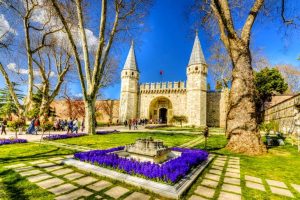
Topkapi Palace is a major historical landmark in Istanbul, originally built by Sultan Mehmed II in 1459 after the Ottoman conquest of the city. For over 400 years, it served as the home of the sultans and the administrative center of the Ottoman Empire. Today, it is a museum displaying the empire’s rich heritage.
Location & Structure
The palace is strategically located between the Bosphorus and the Sea of Marmara, offering stunning views and political advantage. It’s divided into three main courtyards:
• First Courtyard – Public space with support buildings like kitchens.
• Second Courtyard – Restricted to elites and imperial officials, with art collections.
• Third Courtyard – Private royal quarters and gardens, including the Harem.
Special Features
• The Harem was the private residence of the royal family, off-limits to most. It now reveals personal aspects of palace life.
• The interior design features intricate Iznik tiles, painted walls, and carved wood, showcasing high Ottoman craftsmanship.
• The museum holds Islamic relics (like Prophet Muhammad’s sword and hair) and the Imperial Treasury, including royal jewels.
• Gardens surround the palace, used for royal leisure and ceremonies, especially in summer.
Historical Transition
After the fall of the Ottoman Empire, the palace was transformed into a museum in 1924. It now stands as a key symbol of Islamic culture and Ottoman history.
Visitor Info
• Located in Sultanahmet, near Hagia Sophia.
• Open most days (except Tuesdays), 9:00 AM–6:00 PM.
• Entrance fees vary; Harem section needs a separate ticket.
• Photography is allowed in most areas, but restricted in some.
• Guided tours and audio guides are available.
3.Blue Mosque (Sultan Ahmed Mosque)
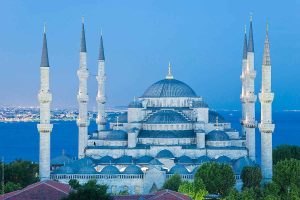
The Blue Mosque, also called Sultan Ahmed Mosque, is a famous Istanbul landmark built between 1609 and 1616 during Sultan Ahmed I’s reign. It’s known for its breathtaking interior decorated with over 20,000 blue İznik ceramic tiles featuring floral and geometric designs, giving it a peaceful and beautiful atmosphere.
Architecturally, it has a large central dome supported by four pillars, surrounded by smaller domes, and six slender minarets, which was unusual at the time. Its large courtyard accommodates thousands during important religious gatherings.
Constructed opposite the Hagia Sophia, the mosque was meant to showcase Ottoman power and Istanbul’s role as a spiritual and cultural hub. It is still an active mosque welcoming worshippers and tourists daily.
Visitors should dress modestly and can visit outside prayer times. Entry is free, and photography is permitted with flash reduced.
Location: Sultan Ahmet, Istanbul
Visiting hours: 09:00–17:00
4.Grand Bazaar (Kapalıçarşı)
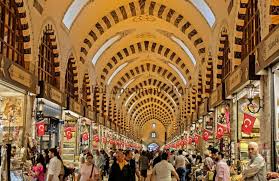
The Grand Bazaar (Kapalıçarşı) in Istanbul is one of the oldest and largest covered markets in the world, established over 560 years ago after the Ottoman conquest in 1453. With more than 4,000 shops across 61 streets, it’s a vibrant center of commerce, culture, and social life attracting millions of visitors yearly.
History & Architecture:
Built during Sultan Mehmed II’s reign, it started as a silk trading center and expanded into a sprawling market surviving fires and earthquakes. Its stunning Ottoman architecture features domed ceilings, intricate arches, and narrow streets, creating a maze-like atmosphere with shops grouped by specialty.
What to Buy:
The bazaar offers a wide range of goods including gold and silver jewelry, handwoven carpets, textiles, leather products, ceramics, spices, sweets, antiques, and souvenirs.
Why Visit:
Beyond shopping, the Grand Bazaar is a cultural experience reflecting centuries of tradition and craftsmanship. Visitors can interact with merchants, sample local foods, and explore Ottoman-era market life.
Visitor Tips:
• Bargaining is expected and encouraged.
• Best visited early morning or weekdays to avoid crowds.
• Easily accessible via tram or metro.
• Wear comfortable shoes and stay hydrated.
• Keep cash handy alongside credit cards.
• Watch your belongings for safety.
Practical Info:
• Open 9:00 AM–7:00 PM, Monday–Saturday; closed Sundays and some holidays.
• Some accessibility challenges due to historic layout.
• Cafes and eateries are available inside.
The Grand Bazaar is a must-visit Istanbul destination that blends history, culture, and shopping into an unforgettable experience.
5.Basilica Cistern: Byzantine Underground Wonder in Istanbul
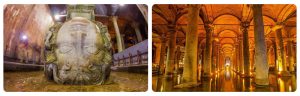
The Basilica Cistern, built around 530 AD under Emperor Justinian I, is a massive underground water reservoir located in Sultanahmet, Istanbul. Originally used to supply water to palaces and important buildings, it showcases impressive Byzantine engineering.
Key Features:
• 336 marble columns, many with intricate carvings, support the cistern’s ceiling.
• Two famous columns feature Medusa heads, placed sideways and upside down—surrounded by mystery.
• The cistern measures 90m x 70m and can hold 80,000 cubic meters of water.
• It’s beautifully lit, with wooden walkways for visitors to explore the tranquil, mystical space.
Visiting Tips:
• Open daily (usually 9 AM–5 PM); check the official website for seasonal changes.
• Tickets required—buy online to skip the lines.
• Near major attractions: Hagia Sophia, Blue Mosque, and Topkapi Palace.
• Wear non-slip shoes due to the humid, sometimes slippery floor.
• Audio guides and tours are available.
• Visits typically take 30–60 minutes.
Why Visit?
The Basilica Cistern offers a unique experience blending history, art, architecture, and mystery—a must-see for those exploring Istanbul’s deep past.
6.Galata Tower: A Historic Icon with Stunning Views of Istanbul
Overview:
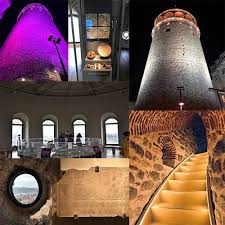
Galata Tower is one of Istanbul’s most famous landmarks, located in the Galata district near Taksim Square and Istiklal Street. Originally built in the 6th century and rebuilt by the Genoese in the 14th century, it served as a watchtower, prison, and observatory throughout history.
Key Facts:
• Height: 67 meters
• Built by: Genoese in the 14th century (current structure)
• Original name: Christea Turris (Tower of Christ)
• Structure: Cylindrical stone tower with a conical roof and panoramic viewing balcony
Highlights & Attractions:
• Panoramic Views of Istanbul and the Bosphorus from the top balcony
• Café & Restaurant at the top serving local and international cuisine
• Elevator access (some floors still require stairs)
• Popular legend: Hezarfen Ahmet Çelebi’s legendary 17th-century flight across the Bosphorus using artificial wings
Visitor Info:
• Opening Hours: 9 AM – 7 PM (may vary by season/holidays)
• Ticket Price: Around 50 Turkish Lira (subject to change)
• Getting There:
• Metro: Şişhane Station (5-min walk)
• Tram: T1 line (near Galata Bridge)
• On Foot: From Sultanahmet via scenic walking routes
Nearby Attractions:
• Istiklal Street: Shopping, dining, and cultural spots
• St. Anthony of Padua Church: Historic Gothic-Romanesque church
• Galata Bridge: Views of the Bosphorus and seafood restaurants
• Istanbul Modern Art Museum: Contemporary Turkish and global art
Travel Tips:
• Visit in the early morning or at sunset for the best views and photos
• Wear comfortable shoes – area has cobblestone and hilly streets
• Photography is allowed and recommended
• Buy tickets online to avoid queues
Suggested Itinerary (1-Day):
• Morning: Visit Galata Tower + breakfast at the top
• Late Morning: Walk along Istiklal Street & visit St. Anthony Church
• Lunch: Eat on Istiklal Street
• Afternoon: Explore Galata Bridge or Istanbul Modern
• Evening: Dinner by the Bosphorus at sunset
FAQs Highlights:
• Yes, there’s an elevator.
• Photography is allowed.
• Tower is suitable for children and elderly (with some stairs).
• Guided tours are available via external operators.
Summary:
Galata Tower is a must-visit Istanbul landmark blending rich history, architecture, and unforgettable views. Whether for the legend of Hezarfen Ahmet or a sunset panorama over the city, it offers a unique and scenic experience for all visitors.
7.Süleymaniye Mosque
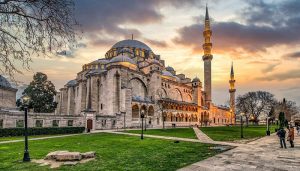
Located on one of Istanbul’s seven hills, Süleymaniye Mosque is a masterpiece of Ottoman architecture commissioned by Sultan Suleiman the Magnificent and designed by architect Mimar Sinan, completed in 1557. It features a grand dome, four minarets, and a large courtyard, blending Islamic and Byzantine architectural styles. The interior is decorated with calligraphy, tiles, and stained glass, and the complex includes a madrasa, hospital, library, and public baths, highlighting its role as a community center.
The mosque symbolizes the “Golden Age” of the Ottoman Empire and serves as the burial site for Sultan Suleiman and his wife, Hürrem Sultan, making it a site of historical and cultural importance. It remains an active place of worship and popular tourist attraction offering stunning views of Istanbul.
Visiting info:
• Free entry
• Open from 09:00 to 17:00
How to go:
• By tram: Take the T1 line and get off at the Beyazıt-Kapalıçarşı stop. From there, it’s about a 10-minute walk uphill to the mosque.
• By bus: Various buses stop near the mosque; check local routes for convenience.
• Walking: The mosque is within walking distance from other historic sites like the Grand Bazaar and the Hippodrome.
8.Marmara Park Shopping Center
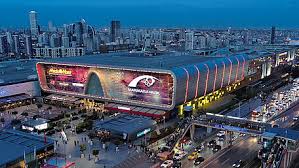
Located in the Beylikdüzü district of Esenyurt, Istanbul, Marmara Park is a galaxy-themed mall opened in 2012, covering 27,000 m² with over 200 stores across 4 floors. It’s one of Istanbul’s largest and most popular shopping centers, especially for tourists seeking famous clothing brands like Zara, Bershka, Mango, Koton, LC Waikiki, Defacto, and Karaca.
Key Features:
• Stores: Fashion, cosmetics, personal care, bags, shoes, and home appliances.
• Dining: Wide variety of restaurants and cafés on the second floor, including the highly recommended “Burger House.”
• Entertainment: Cinema halls for adults and children, plus supervised children’s play areas.
• Facilities: Free Wi-Fi, wheelchairs, baby strollers, clean restrooms (lower floor), prayer room (mosque), safe deposit boxes, and currency exchange (Nadim Exchange Office on the second floor).
• Parking: Large parking lot accommodating up to 4,000 cars.
Opening Hours:
Daily from 10:00 AM to 10:00 PM.
How to Get There:
• By Metrobus: The easiest and fastest way is via Istanbul’s Metrobus system, which provides direct access to Marmara Park from anywhere in the city.
• By Car: The mall has ample parking space for visitors driving in.
Visiting Tips:
• Plan your visit during weekdays or early hours to avoid weekend crowds.
• Use the currency exchange on the second floor if you need to convert money.
• Take advantage of the children’s play area if visiting with kids for a stress-free shopping experience.
• Don’t miss trying the burgers at “Burger House” for a unique taste.
• Free Wi-Fi and clean restrooms add to the convenience of your visit.
9.Emirgan Park, Istanbul – Top Natural Tourist Attraction
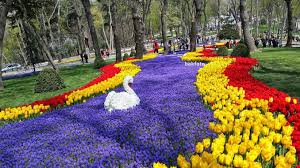
Emirgan Park is a historic and scenic park located in the Emirgan neighborhood beside the Bosphorus Strait in Istanbul. Spanning over 404,000 square meters, it is renowned for its vibrant tulip gardens, especially during the Istanbul Tulip Festival every April.
Key Features:
• Rich history dating back to the 16th century, with ownership by notable figures like Grand Vizier Nişancı Feridun Bey and Khedive Ismail Pasha.
• Home to three historic wooden pavilions: the Yellow Pavilion (traditional Ottoman style with intricate decorations), the Pink Pavilion (used for events and now a weekend café), and the White Pavilion (Neoclassical style, now a café/restaurant).
• Offers walking paths, playgrounds, gazebos, and a decorative pond.
• Open daily with free admission; parking inside the park requires a fee.
Location & Access:
• Located in Emirgan, Istanbul.
• Easily reachable by various public bus routes from Taksim, Kabataş, and Beşiktaş.
Visitor Info:
• Recommended visit duration: 2-3 hours.
• Address: Reşitpaşa Mahallesi, Emirgan Sk., 34467 Sarıyer/İstanbul, Turkey.
10.Princes’ Islands, Istanbul – A Peaceful Getaway Near the City
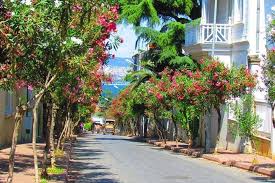
The Princes’ Islands are a group of nine small islands in the Sea of Marmara, near Istanbul, famous for their tranquility, natural beauty, and historic charm. Only four islands are open to visitors: Büyükada, Heybeliada, Burgazada, and Kınalıada.
Why Visit?
• Escape the city’s noise and traffic; no motor vehicles are allowed.
• Explore old wooden houses, lush green forests, peaceful beaches, and historic sites.
• Enjoy activities like cycling, carriage rides, swimming, boating, and sampling local seafood cuisine.
Key Islands:
• Büyükada: Largest island, known for Ottoman architecture, cobbled streets, Aya Yorgi Church, and the Princes’ Islands Museum.
• Heybeliada: Known for its greenery, Halki Orthodox Theology School, parks, and quiet beaches.
• Burgazada: Smaller, peaceful island with pine forests and historic sites like Sait Faik Museum.
• Kınalıada: Closest to Istanbul, known for its red soil, beaches, and historic mansions.
History:
Named for Byzantine princes exiled there for political reasons, the islands were later summer residences for Ottoman nobility.
Climate & Best Time to Visit:
Mild four-season climate. Best visits are in spring and autumn for pleasant weather and fewer crowds. Summer is peak season for beach activities.
Getting There:
Accessible by public ferries from various points in Istanbul (Kabataş, Eminönü, Beşiktaş on the European side; Kadıköy, Bostancı on the Asian side). Sea buses and private boats are also options.
Additional Info:
• Ferry rides are affordable and convenient.
• Tours often include bike or carriage rides, guided visits, and dining experiences.
• The islands offer a perfect day trip or a peaceful multi-day retreat from Istanbul’s bustle.



Leave a Reply